A robot can sort a parcel, set a route, or flag a damaged part without asking a person each time. A decision about medical care, access to a home, or the use of force carries a different cost when the system gets it wrong.
Trust should follow the cost of an error. For anyone buying automation, the useful question is not whether a robot sounds smart, but where its decision must stop.
- Low-risk tasks can run with set limits and routine checks.
- High-risk choices need a named person who can pause or reject the result.
- A score without a reason, record, or appeal is hard to trust.
What the robot is actually deciding
Robots make decisions in more than one way. A mobile robot may choose a clear route around a box, while a vision system may sort an object by shape, color, or a trained pattern. These choices can look similar on a screen, yet they carry different risks.
The first test is the result of the decision. If a wrong answer damages a $20 part, the system can often recover through inspection or a second pass. If a wrong answer blocks a person from care or sends a machine into a crowded area, the system needs tighter limits and human control.
A confidence score helps only when people know what it measures. A value of 0.92 may describe the model's internal score, not a 92% chance that the answer is right. The buyer needs to know how the score was set, which cases lower it, and what happens below the cut-off.
Where trust breaks
Failure can happen before the robot makes a choice. Its camera may miss a dark object, its map may be out of date, or a sensor may report a clean path when a person is standing outside its view. The decision layer then works with bad input.
The same problem appears when the task changes. A system trained on dry floors may behave differently on water. A picking arm that handles boxed goods may fail with soft bags, loose cables, or a damaged label. A live site contains more variation than a short demo can show.
People also need a record of what happened. Store the sensor data used for the decision, the software version, the model's result, and the person who approved an action. Without that record, a team can't tell whether the fault came from the robot, the data, or the operating rules.
When a robot makes a choice, the useful question is what task it was running and what a person could see at that moment. Reporting from Robot24 can place that event beside the machine, site, and human handoff, so the record has facts to compare with the stated rule.
Human control needs a real shape
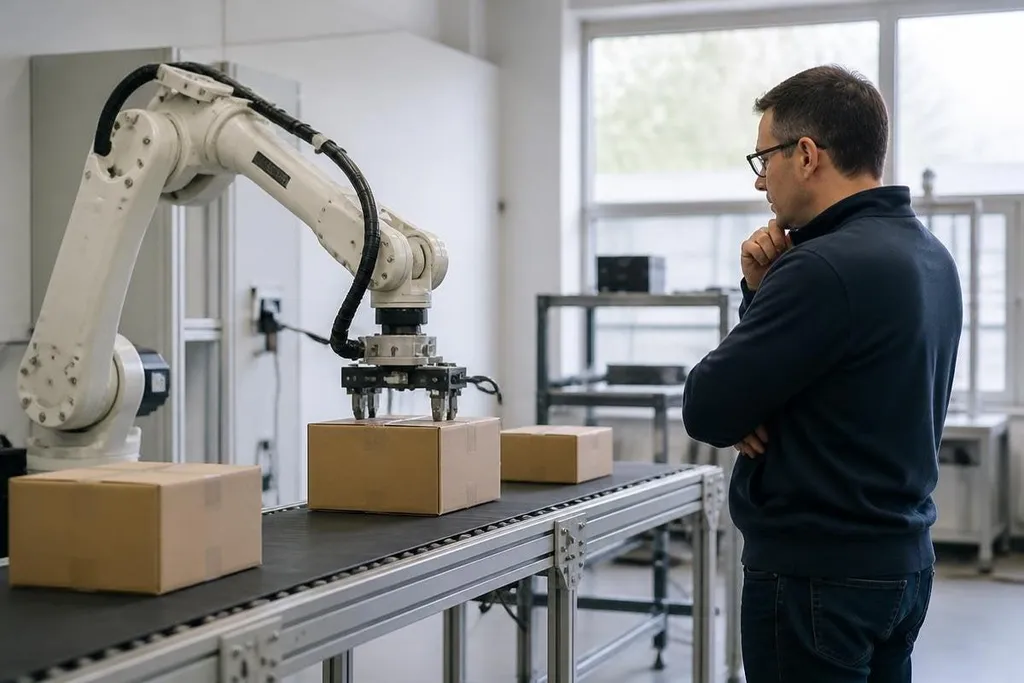
“Human oversight” can mean a person watches a dashboard, or it can mean a person must approve each action. Those are not the same setup. A worker who sees an alert after a robot has already moved may have no safe way to stop it.
A workable system gives the person time, information, and a clear control. The stop button must be reachable. The alert must say what the robot saw and what it plans to do. The operator must have a safe fallback when the network drops or the robot loses its position.
The person also needs authority. If company rules punish every pause, workers will learn to approve warnings without reading them. That turns human review into a rubber stamp, which adds paperwork without adding safety.
I'd keep people in the approval loop whenever a wrong decision can injure someone, remove a basic right, or create a cost that the operator can't quickly reverse.
A buying check for decision systems
Use this list before a robot makes choices in a live workplace:
- Name the harm: write down the result of a wrong decision and who carries the cost.
- Set the boundary: list the conditions where the robot must stop and ask for help.
- Check the input: test lighting, weather, floor changes, blocked views, and sensor faults.
- Show the reason: give the operator the image, reading, rule, or score behind the alert.
- Test the stop: measure how long it takes a person to pause the system from a normal working position.
- Review the record: keep enough data to link each decision to software, sensors, and approval.
These checks do not make a system infallible. They make its limits visible, which gives a team a way to fix weak points before the cost rises.
What happens next
Trust will grow through defined limits and records, not human-like voices or polished demos. Robots can handle more decisions as their error cost stays low, their input stays clear, and a person can still stop them in time.